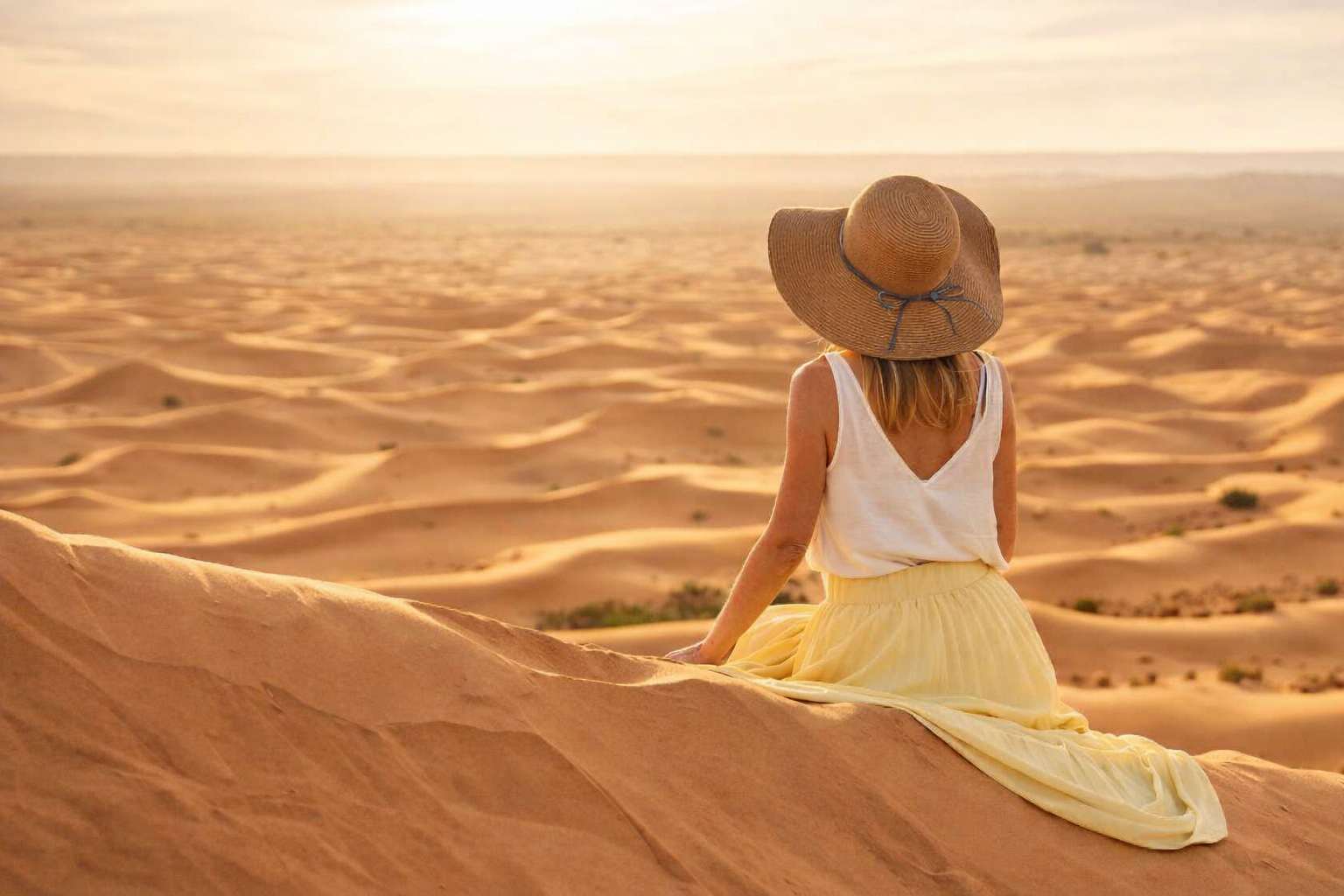
The 5 Days Desert Tour from Marrakech is a full circuit rather than an out-and-back. You go east through the gorges to Erg Chebbi, spend proper time in the desert, then return west along the Draa Valley, which means five days of new landscape rather than two days of repeat scenery.
The desert section is the point. Two nights around Merzouga give you a night on the sand, a night with a hot shower, two sunsets, two sunrises, and a full day for nomad families, the black desert, the seasonal flamingo lake and the Gnaoua musicians of Khamlia.
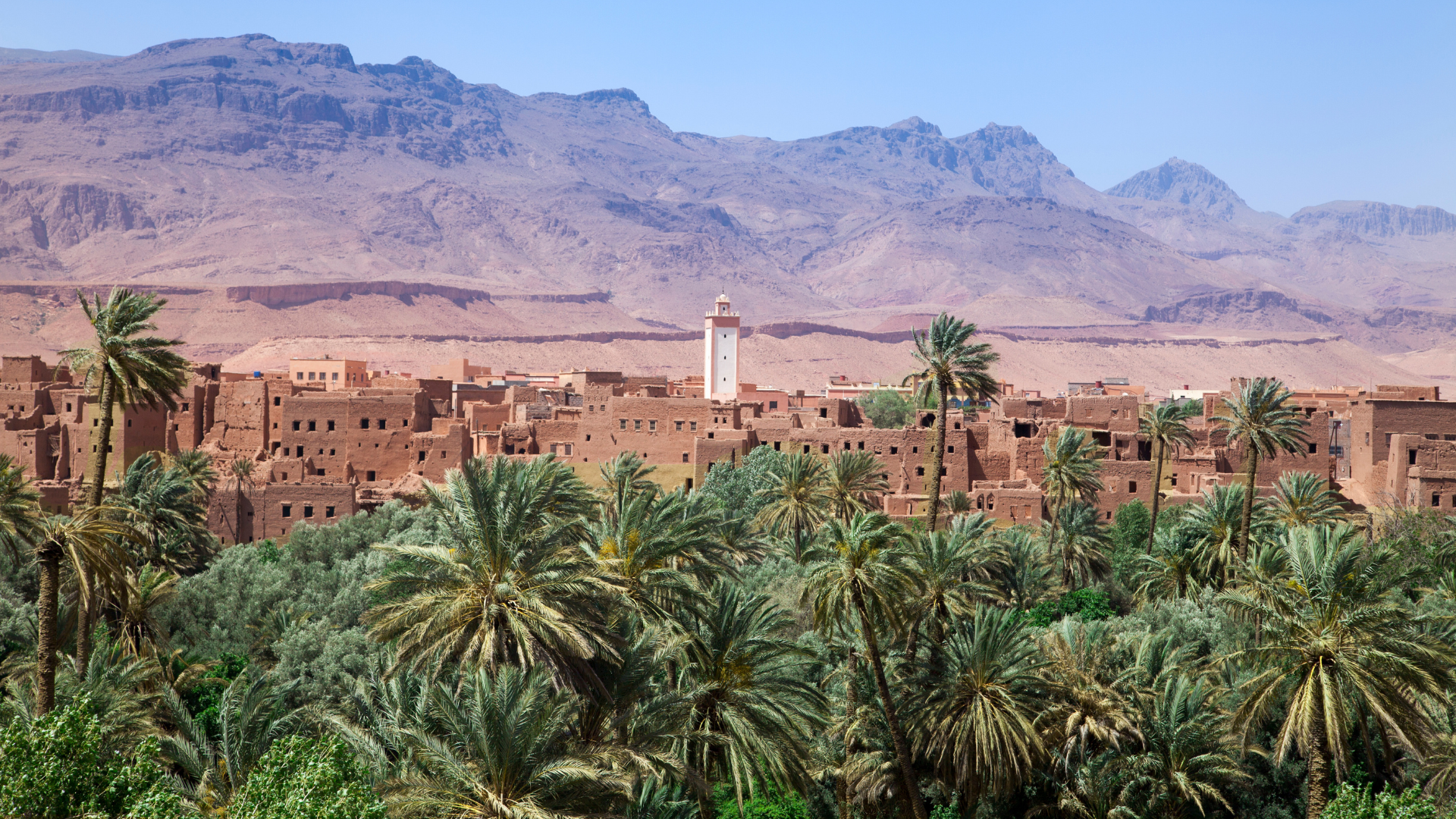
The return leg follows the longest oasis in Morocco: the Draa, a thin green ribbon of date palms and mud-brick ksour running through otherwise bare country, with a night in the kasbah town of Nkob or Agdz.
Early pickup in Marrakech, then the climb into the High Atlas over the Tizi n Tichka pass, with stops at the viewpoints where the whole range opens up behind you.
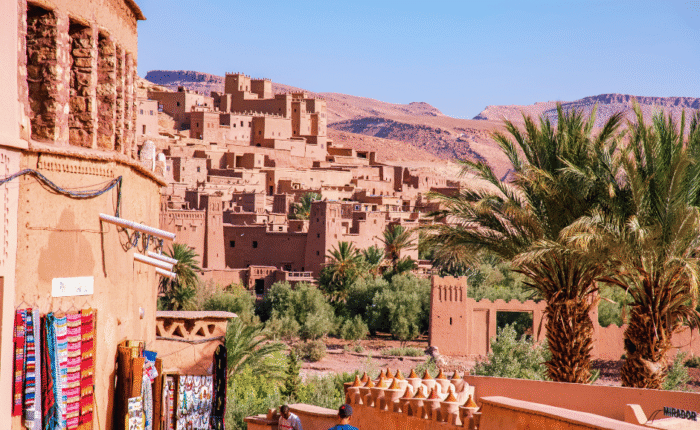
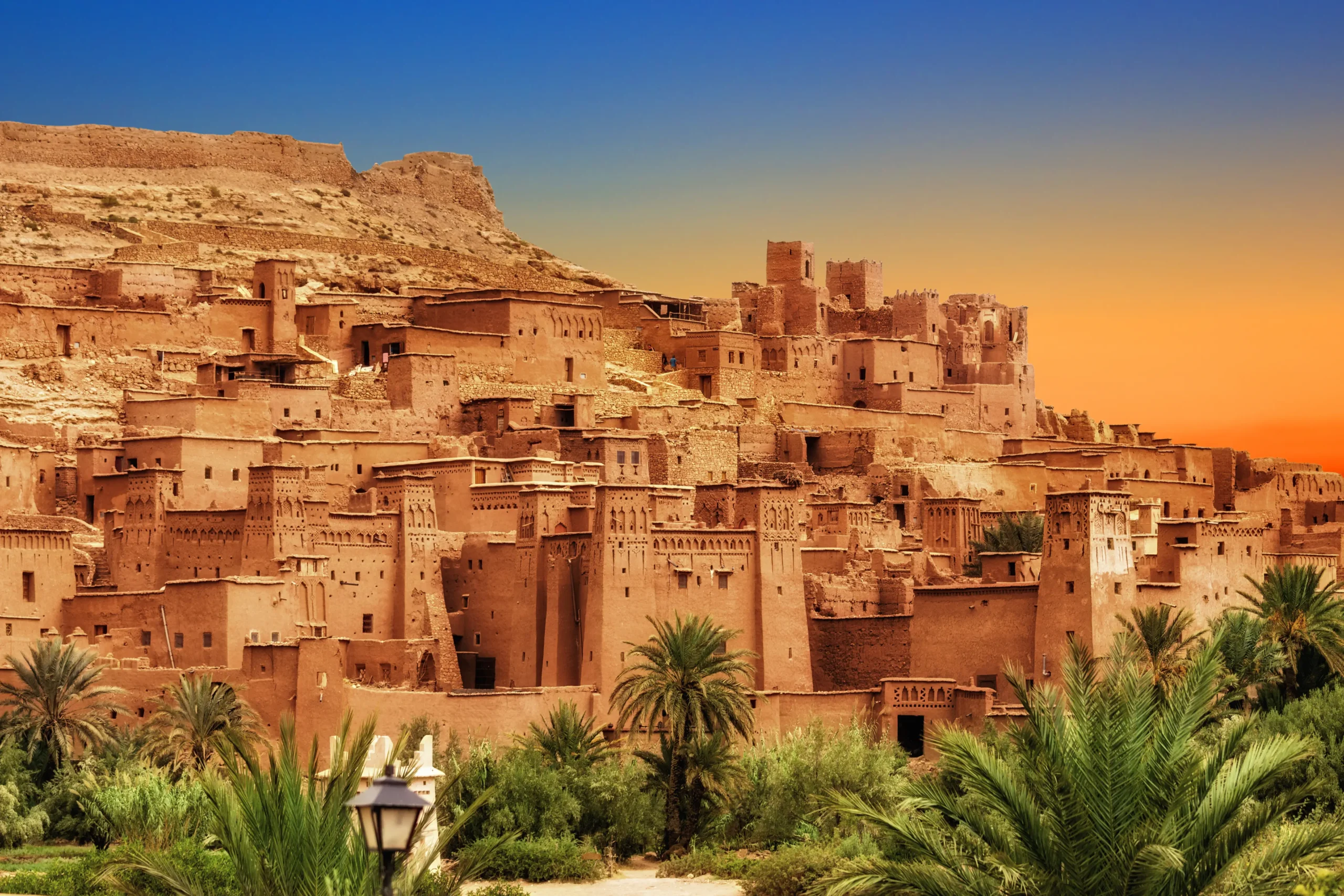
Turn off for Ait Ben Haddou and walk up through the earthen ksar to the granary at the top for a view over the Ounila valley. Lunch in the village, then on to Ouarzazate and the Taourirt Kasbah.
The afternoon crosses the Skoura palm oasis and the Valley of Roses at El Kelaa des Mgouna before reaching the Dades Valley, where the road twists between red cliffs and eroded rock towers.
Accommodation: Hotel or guesthouse in the Dades Valley
Morning walk in Todra Gorge, where the canyon narrows to a few metres and the limestone walls climb around 300 metres above the streambed.
Continue through Tinghir and Erfoud, with a stop at a fossil workshop, then out across increasingly empty country until Erg Chebbi rises ahead.
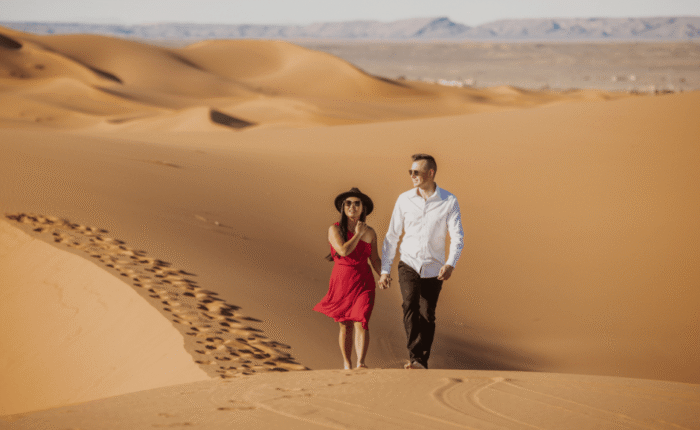
Late afternoon you swap the vehicle for a camel and ride into the dunes, reaching camp around sunset. Dinner is served under the tent, followed by drumming around the fire and a night in a private tent on the sand.
Accommodation: Berber desert camp, Erg Chebbi
Sunrise on the dunes, camel ride back, breakfast and a shower at your hotel.
The day is spent circling the erg by 4×4. You stop at a nomad family camp on the hamada for tea, look for flamingos at the seasonal lake of Dayet Srji if there is water, cross the black desert of dark volcanic rock, and visit the abandoned mines at Mfis.
In the afternoon, Khamlia, where a Gnaoua ensemble plays music brought north across the Sahara generations ago. Return to the dunes for a second sunset before dinner at your hotel.
Accommodation: Hotel or kasbah in Merzouga
Leave the dunes after breakfast and head west by a road most visitors never take. First Rissani, with its covered market and its history as the seat of the Alaouite dynasty, then Alnif, known among geologists for trilobites.
The route runs along the southern flank of the Jbel Saghro, a bare volcanic massif with almost no settlement, before dropping into Nkob, a village with more than forty kasbahs and a fine view over its palm grove.
You continue into the Draa Valley proper, following the river through palm groves and fortified villages to your overnight stop near Agdz.
Accommodation: Kasbah or guesthouse in the Draa Valley
A relaxed morning in the Draa. There is time to walk into a palm grove or visit one of the old ksour before the drive north over the Tizi n Tinififft pass to Ouarzazate, where you stop for lunch.
From there the road climbs back over the High Atlas by the Tizi n Tichka, with a last set of viewpoints on the descent.
Arrival in Marrakech in the late afternoon or evening, with drop-off at your hotel or riad.
This one is a loop that starts and ends in Marrakech, returning through the Draa Valley. The other is one-way and finishes in Fes. Choose by where you need to be on the last night.
Because it is new ground. The Draa is the longest oasis in Morocco and the stretch through Nkob and Agdz has kasbahs and palm groves you do not see on the northern route.
By default one night at the camp on the sand and one in a hotel in Merzouga. Two camp nights are possible on request.
Between four and seven hours, with day three being almost entirely local excursions. The longest stages are the first and the last.
Yes. Your own vehicle and driver, and the itinerary can be adjusted before departure or along the way.
March to May and September to November are the most comfortable. Summer is very hot in the south, and January nights in the desert are cold, though the days are clear and pleasant.
Five days is the shortest itinerary that lets you reach the big dunes, stay long enough to see the desert wake up twice, and come back a different way. Nothing is driven twice, and the pace never turns into a race.
Every departure is private, so you set the hour you leave and how long you stay at each stop.