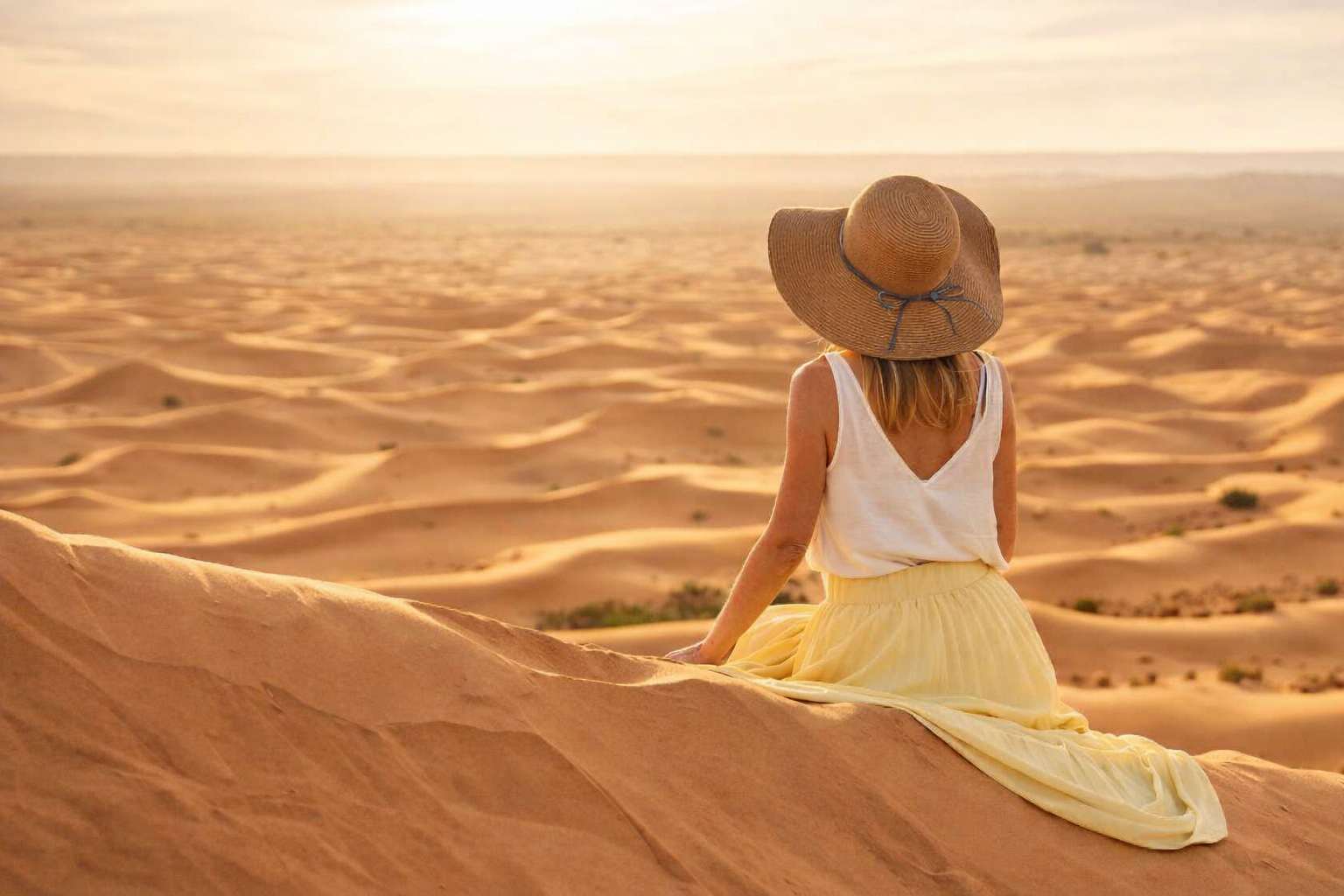
The 14 Days Grand Morocco Tour from Casablanca is the complete version. It reaches the Mediterranean at Tangier and Tetouan, gives Chefchaouen a free day, spends two nights in the Erg Chebbi dunes, and then does something no shorter itinerary has room for: it drives both southern roads.
Most tours choose between the gorge route through Todra and the Dades and the oasis route down the Draa. Two weeks is enough for both, so you come west from Merzouga through the gorges, turn south at Ouarzazate into the Draa Valley as far as Zagora, and only then cross back over the Atlas to Marrakech.
The trip finishes on the Atlantic at Essaouira before the coast road north through Oualidia and El Jadida to Casablanca.
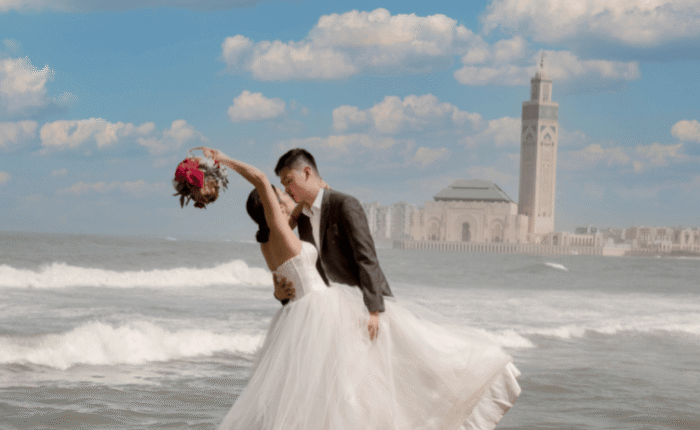
Pickup at Casablanca airport, port or hotel, starting with the Hassan II Mosque if your arrival allows it.
North to Rabat for the Kasbah of the Udayas and the Hassan Tower, then up the coast to Asilah, a walled town of white houses and painted ramparts, for lunch by the sea.
Arrival in Tangier in the late afternoon, with time for Cape Spartel where the Atlantic meets the Mediterranean.
Accommodation: Hotel in Tangier
Morning in Tangier: the Kasbah, the medina, the Grand Socco and the Caves of Hercules on the coast west of the city.
East along the Mediterranean to Tetouan, whose medina was built by refugees from Granada and still feels Andalusian.
The afternoon climbs into the Rif to Chefchaouen, arriving in time to walk up to the Spanish mosque for the view over the blue town at sunset.
Accommodation: Riad or hotel in Chefchaouen
A day without driving. The medina is steep, compact and painted lime blue; the kasbah in the main square has a garden and a tower, and Ras el Maa spring sits at the top of the town.
For a longer walk, the Akchour waterfalls and the natural arch known as the God Bridge are about an hour away in the Rif.
Chefchaouen is also the best place on the route to buy woven blankets, and the local goat cheese is worth trying.
Accommodation: Riad or hotel in Chefchaouen
Out of the Rif to Volubilis, the Roman provincial capital, where mosaic floors, the basilica and the triumphal arch stand in farmland below Moulay Idriss.
A stop in Meknes for the Bab Mansour gate, the walls and the royal granaries.
Arrival in Fes in the late afternoon, evening free.
Accommodation: Riad or hotel in Fes
A full day in Fes el Bali, a working ninth-century city with no cars and around nine thousand lanes.
The circuit takes in the Bou Inania and Attarine madrasas, the Nejjarine fountain and woodwork museum, the Al Quaraouiyine mosque and library, and the Chouara tanneries.
A licensed guide is recommended. The afternoon is free for the souks or the Merenid tombs above the city at sunset.
Accommodation: Riad or hotel in Fes
South over the Middle Atlas through Ifrane and the Azrou cedar forest, where Barbary macaques gather by the road.
Lunch at Midelt, then down into the Ziz Valley with its long belt of date palms and the viewpoint above the gorge.
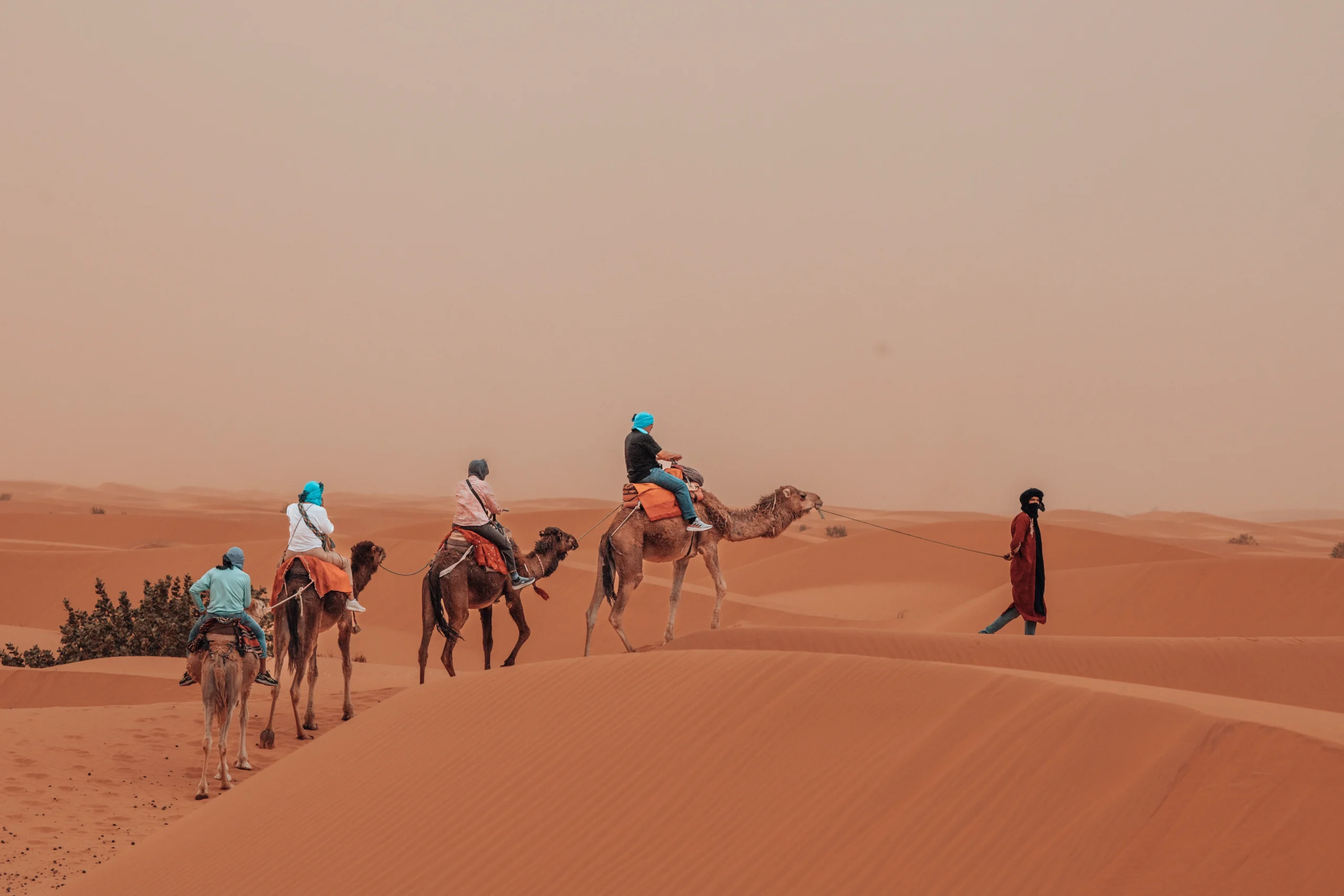
Arrival at Merzouga in the late afternoon, then the camel ride into Erg Chebbi, reaching camp at sunset for dinner and drums under the tent.
Accommodation: Berber desert camp, Erg Chebbi
Sunrise from a dune crest, camel ride back, breakfast and a shower at your hotel.
A 4×4 circuit fills the day: tea with a nomad family on the hamada, the seasonal lake at Dayet Srji, the black volcanic desert and the abandoned kohl mines at Mfis.
Late afternoon at Khamlia for Gnaoua music, then a second sunset at the erg.
Accommodation: Hotel or kasbah in Merzouga
West with stops at Rissani and its covered souk and at Erfoud for the fossil workshops.
The afternoon reaches Todra Gorge, where the walls rise about 300 metres and the canyon narrows to a few paces above the stream. A walk on the valley floor is the best of the day.
Short drive on to the Dades Valley for the night, below the eroded rock towers.
Accommodation: Hotel or guesthouse in the Dades Valley
A short and easy day. First the Dades gorge road above your hotel, with its famous switchbacks, then west to El Kelaa des Mgouna, where most of the Moroccan rose crop is distilled into water and oil.
The Skoura oasis follows, a thick palm grove holding several old kasbahs, including Amerhidil, which is open to visitors.
Arrival in Ouarzazate in the afternoon, with time for the Taourirt Kasbah and the Atlas film studios.
Accommodation: Hotel in Ouarzazate
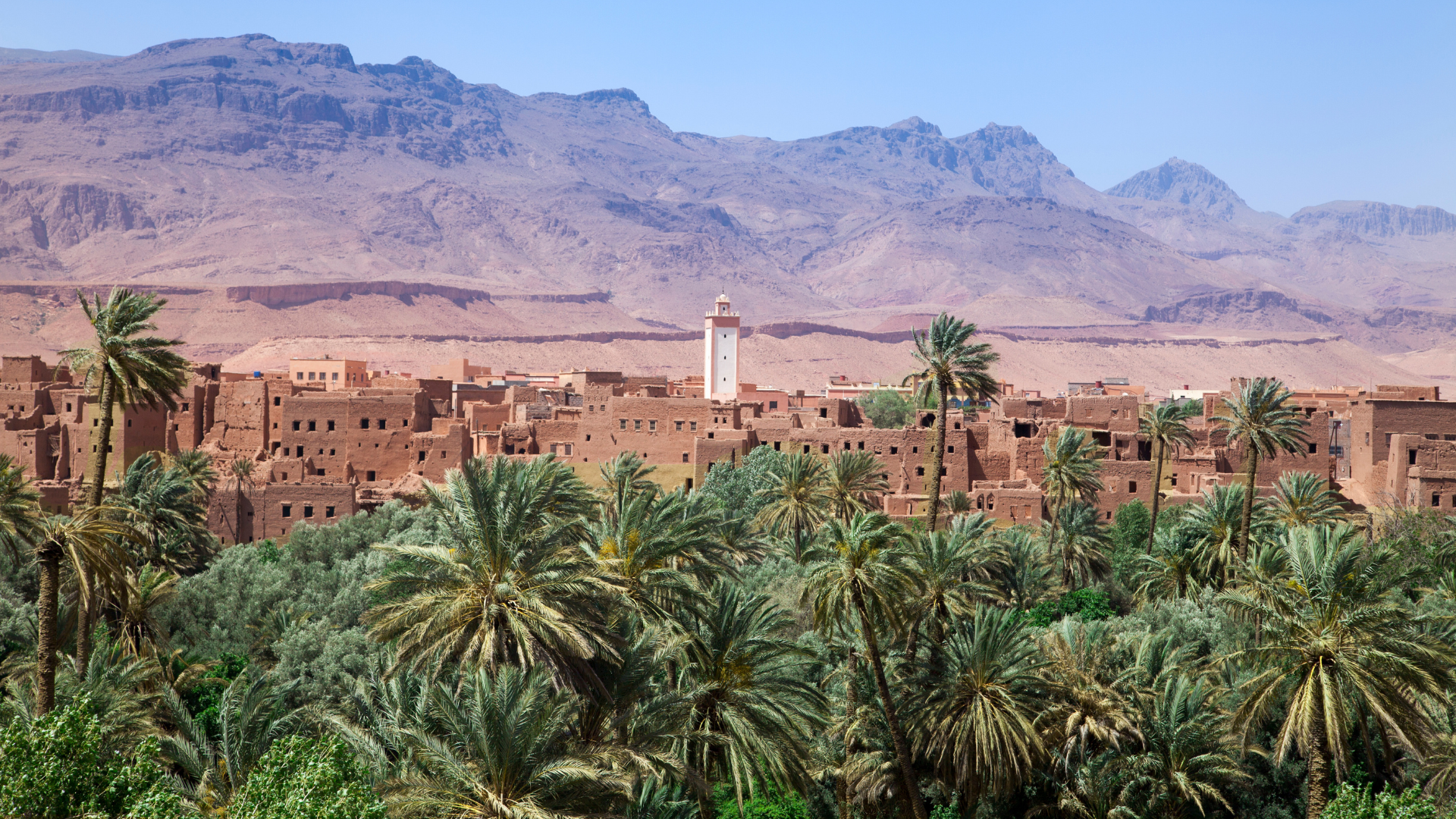
South over the Tizi n Tinififft pass into the Draa Valley, the longest oasis in Morocco, a thin green line of date palms and mud-brick ksour running through otherwise bare country.
You stop at Agdz below the Jbel Kissane, and can walk into one of the fortified villages along the river.
Arrival in Zagora in the afternoon. The famous sign pointing to Timbuktu, fifty-two days by camel, is on the edge of town, and the palm grove is best in the last hour of light.
Accommodation: Kasbah or hotel near Zagora
North again through the Draa, with time for the ksour and palm groves you passed in the other direction.
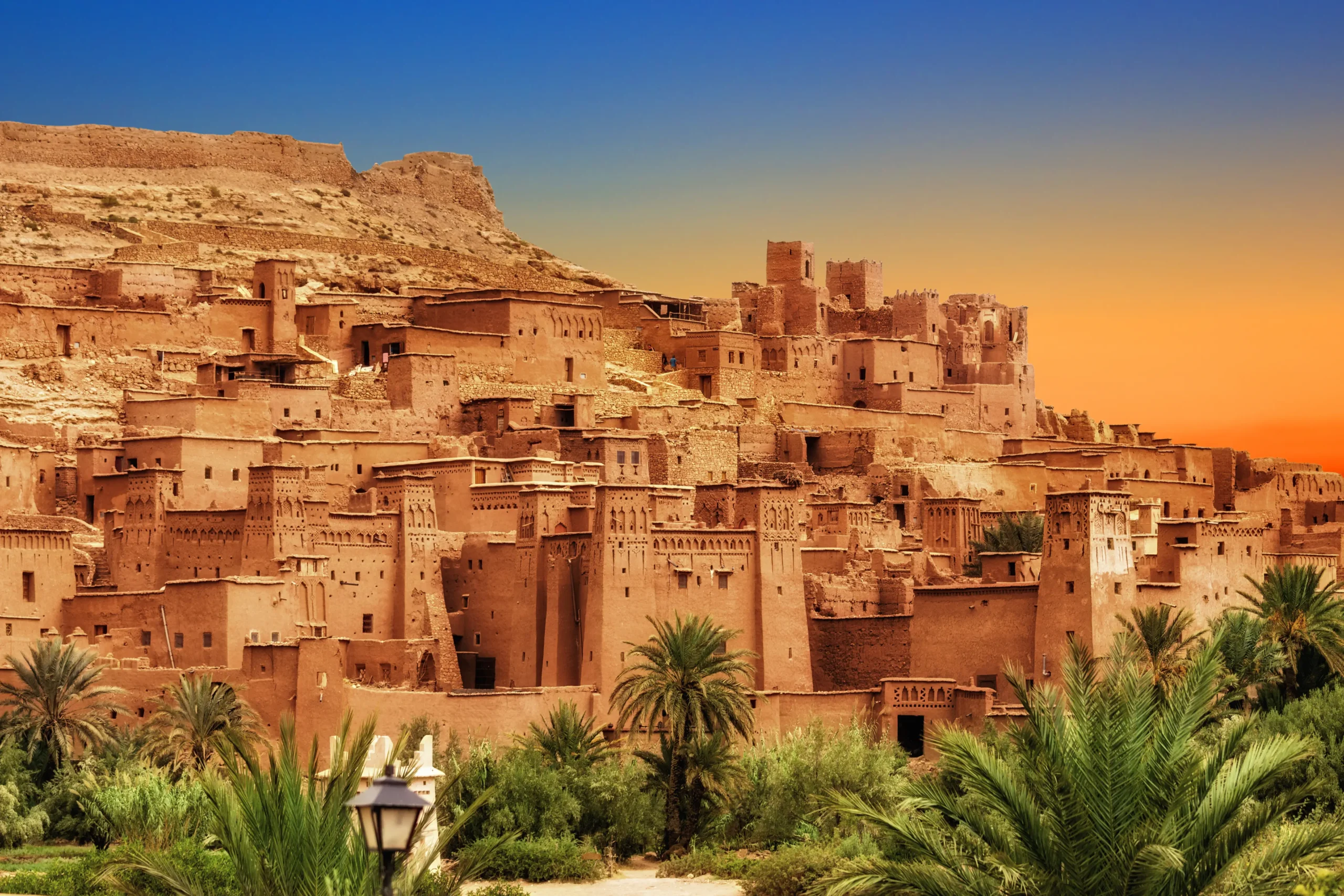
Beyond Ouarzazate you turn off for Ait Ben Haddou, cross the riverbed and climb through the earthen ksar to the granary at the top for the view over the Ounila valley.
The last stage crosses the High Atlas by the Tizi n Tichka pass, with viewpoints on the descent into Marrakech.
Accommodation: Riad or hotel in Marrakech
A guided day covering the Koutoubia minaret, the Saadian tombs, the Bahia Palace and the Ben Youssef Madrasa.
The afternoon is free for the souks, the Majorelle garden and the Yves Saint Laurent museum, or a hammam after two weeks on the road.
Jemaa el Fna turns into an open-air kitchen after dark and is worth an hour on foot.
Accommodation: Riad or hotel in Marrakech
West across the Haouz plain into argan country, with a stop at a women cooperative where the oil is pressed by hand.
Arrival in Essaouira around midday, leaving the afternoon free for the harbour, the Skala ramparts and the walled medina.
Dinner at the port, where the day catch is grilled at the stalls.
Accommodation: Riad or hotel in Essaouira
North along the Atlantic with a stop at the Oualidia lagoon and its oyster beds, and at El Jadida for the Portuguese cistern beneath the old town.
Arrival in Casablanca in the afternoon, with time for the Hassan II Mosque or the Corniche depending on your flight.
Drop-off at the airport, at the port or at your hotel.
Because two weeks is the first length with room for it. The gorge route through Todra and the Dades and the oasis route down the Draa are completely different landscapes, and most itineraries force a choice between them.
The Draa Valley is, more than Zagora itself. The drive between Agdz and Zagora runs through the longest palm oasis in the country, past dozens of fortified villages, and sees very little traffic.
Yes. A camp night in the Zagora sands can replace the kasbah hotel, which gives you two different deserts in one trip.
Two: the run to Merzouga and the return to Marrakech. Everything else is four or five hours at most, and three days have no transfer at all.
Breakfast daily, plus dinner at the desert camp, in Merzouga, in the Dades Valley and in the Draa, where restaurants outside the guesthouses are scarce.
Yes. Common additions are a second Essaouira night, the Ouzoud waterfalls, or the High Atlas villages above Marrakech. The route can also be reversed to fit your flights.
Fourteen days is enough to stop treating Morocco as a set of highlights. You cross the Rif, the Middle Atlas and the High Atlas, see the Mediterranean and the Atlantic, spend two nights in the Sahara, and take both roads through the south instead of choosing one.
The whole tour is private, runs as a loop from Casablanca on a single return flight, and can be reshaped day by day before you leave.