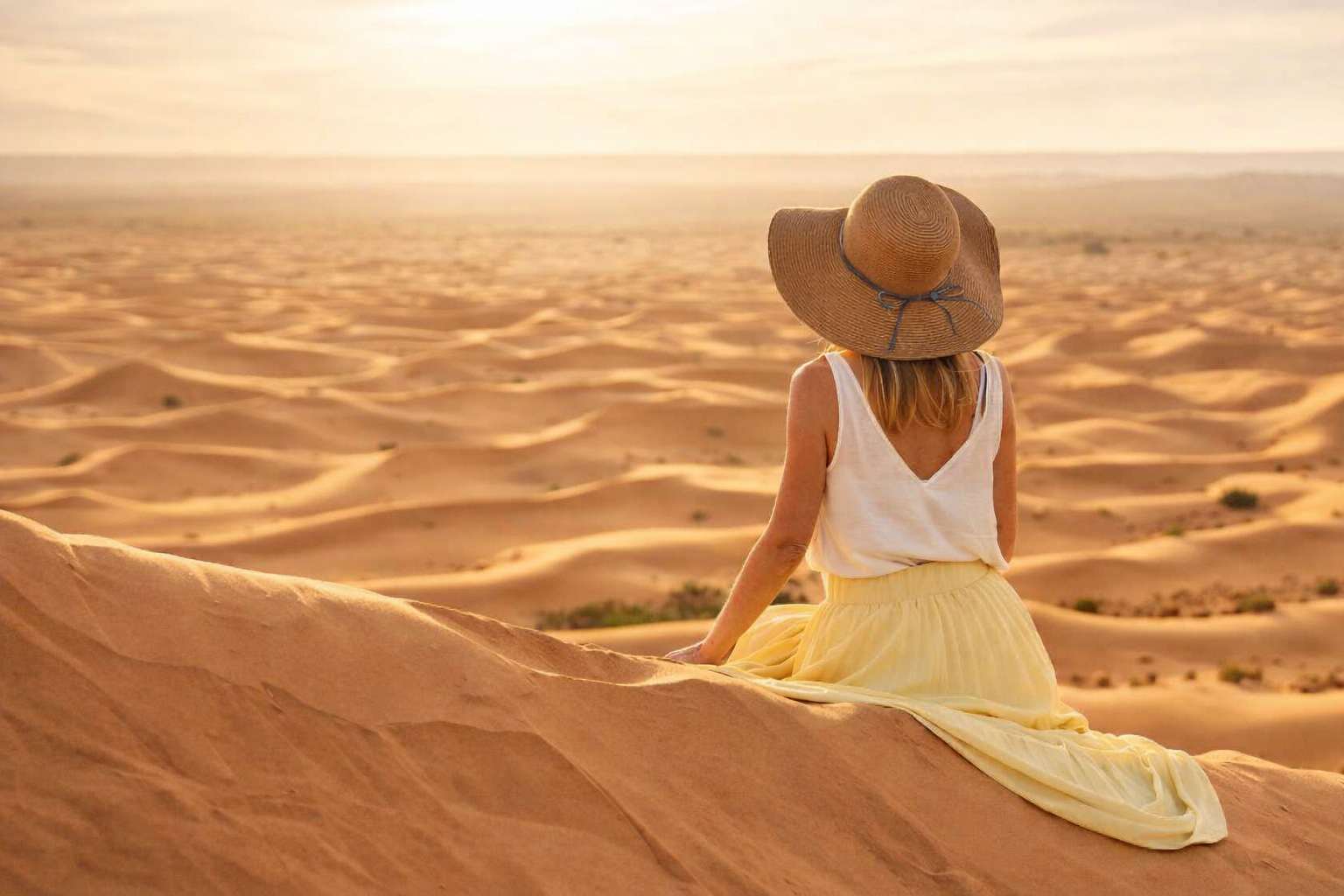
The 10 Days Morocco Grand Tour from Marrakech is the complete loop: the Sahara, the Atlas, the four imperial cities, the Rif and the Atlantic coast, without the compressed days that shorter versions require.
It opens with Marrakech itself rather than a dawn departure, which gives late arrivals a day to recover. The southern leg then follows the kasbah road to Erg Chebbi, where two nights and a free day allow for camel treks at both ends of the day, a nomad camp, the black desert and the Gnaoua musicians of Khamlia.
The northern half covers Fes with a full day in the medina, the Roman city of Volubilis, imperial Meknes, two nights in Chefchaouen, the coast at Asilah, the monuments of Rabat and the Hassan II Mosque in Casablanca before the road returns to Marrakech.
Pickup at Marrakech airport or at your riad. The day is spent in the city, at whatever pace your arrival allows.
The route usually covers the Koutoubia minaret, the Saadian tombs, the Bahia Palace with its painted ceilings, and the Ben Youssef Madrasa, then the Majorelle garden in the late afternoon when the light is best.
The evening belongs to Jemaa el Fna, which changes character entirely after dark as the food stalls go up.
Accommodation: Riad or hotel in Marrakech
South out of the city and over the High Atlas by the Tizi n Tichka pass, stopping at the viewpoints and in a Berber village on the climb.
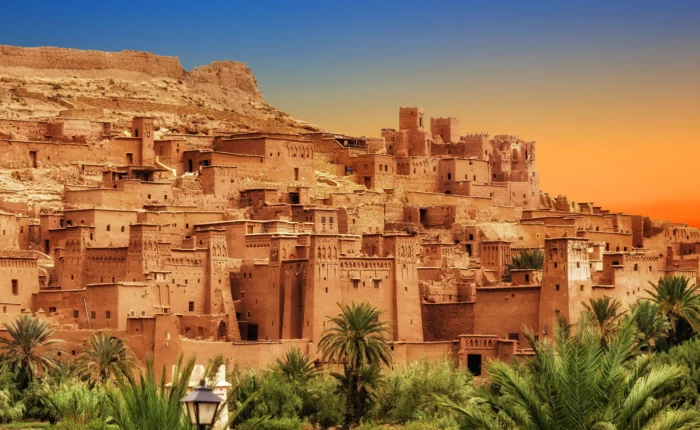
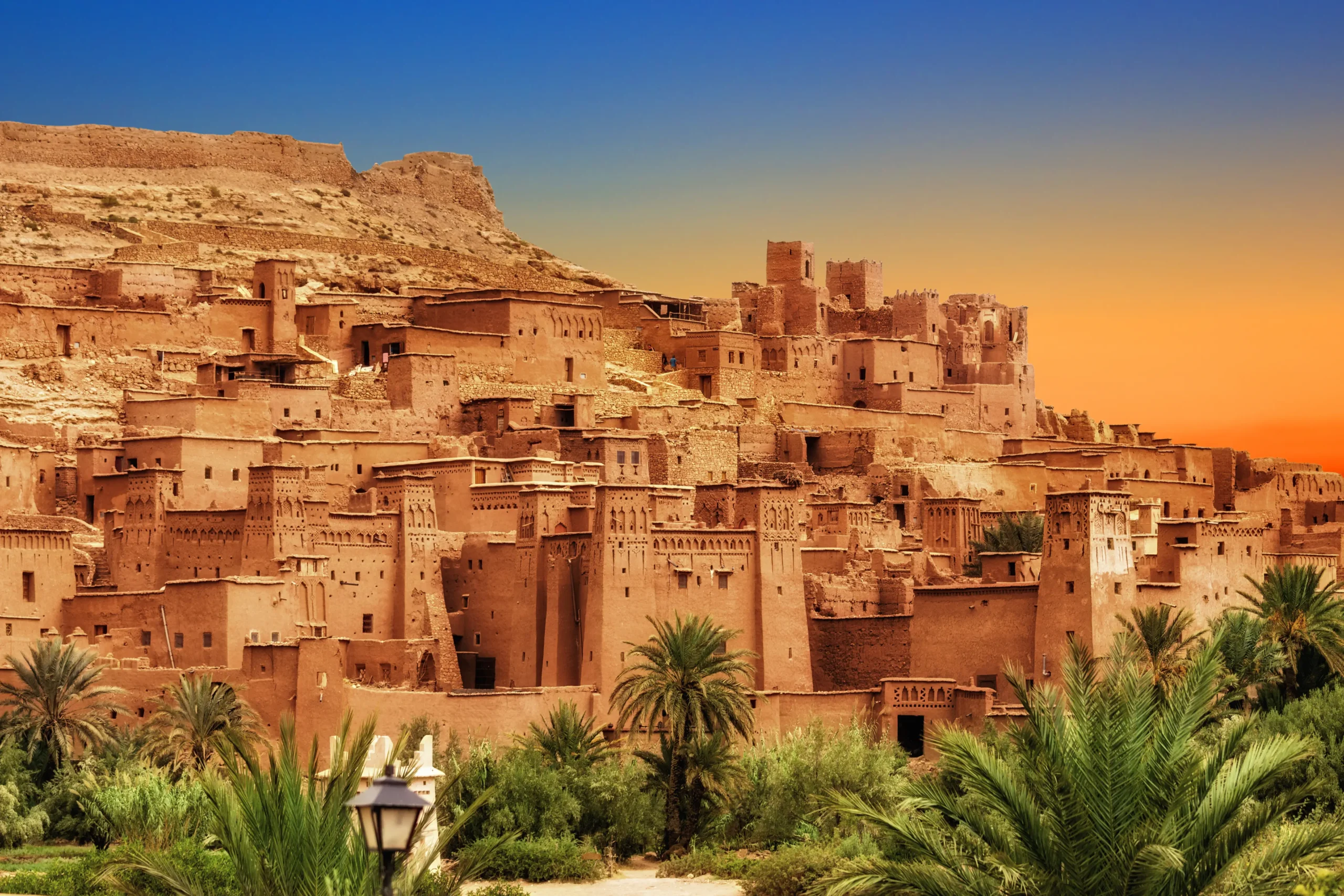
At Ait Ben Haddou you walk up through the ksar to the granary at the top for the view over the Ounila valley, then take lunch in the village.
The afternoon passes Ouarzazate and follows the kasbah road through Skoura and El Kelaa des Mgouna to the Dades Valley.
Accommodation: Hotel or guesthouse in the Dades Valley
A morning walk in Todra Gorge, where the canyon closes to a few metres between walls around 300 metres high.
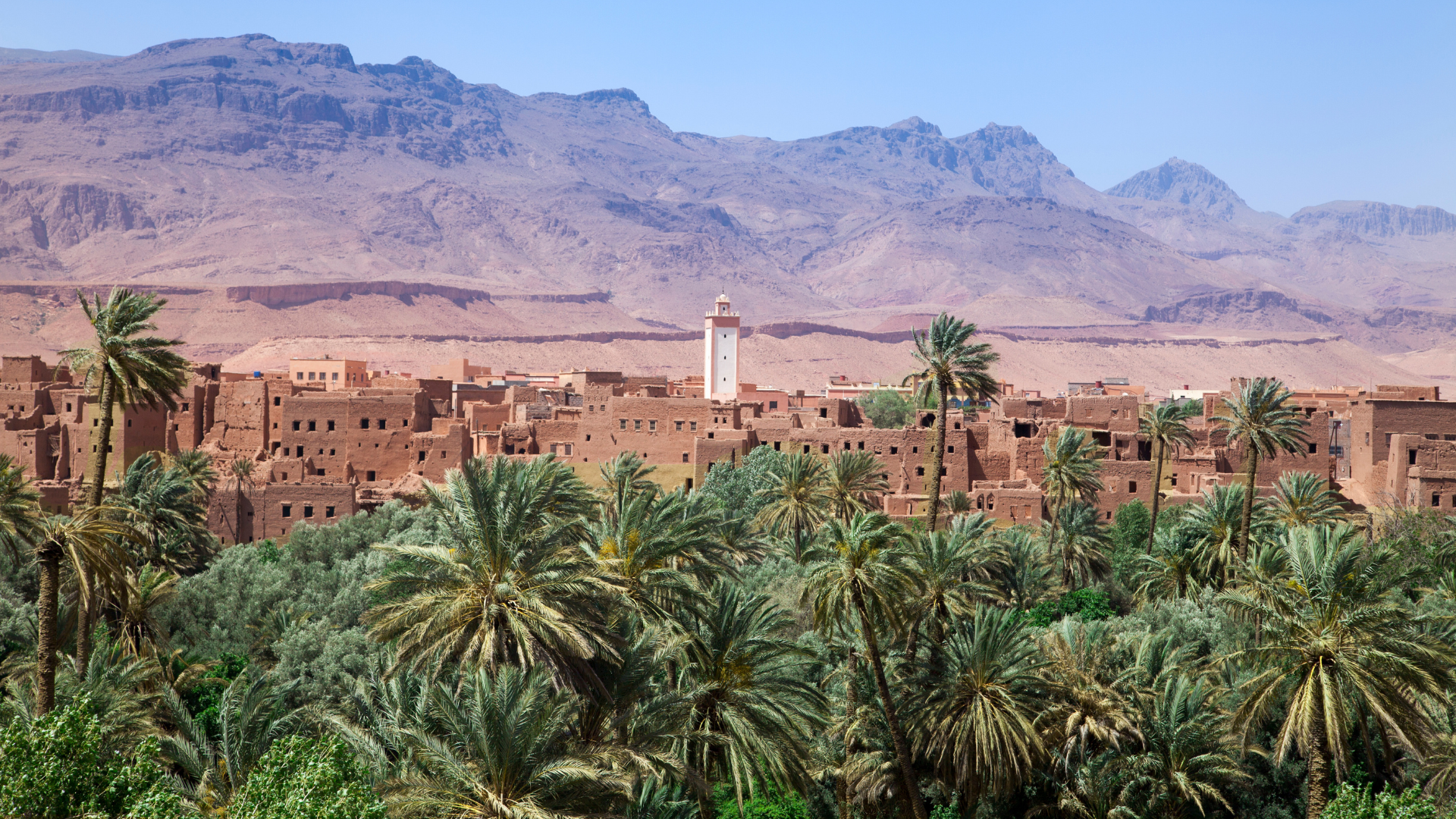
East through Tinghir and Erfoud, with a stop at a fossil workshop, then across the hamada until Erg Chebbi rises on the horizon.
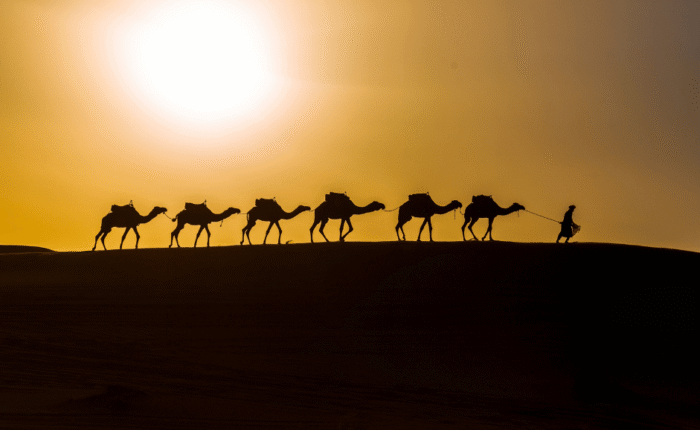
You arrive at Merzouga in the afternoon and ride into the dunes by camel to reach camp at sunset. Dinner under the tent, drums by the fire, and a night on the sand.
Accommodation: Berber desert camp, Erg Chebbi
Sunrise from the crest of a dune, then the camels take you back for breakfast and a shower.
The day circles the erg by 4×4: tea with a nomad family on the open hamada, the seasonal lake at Dayet Srji where flamingos stop in spring, the black volcanic desert, and the abandoned mines at Mfis.
Late afternoon at Khamlia for Gnaoua music, then a second sunset at the dunes before dinner at your hotel.
Accommodation: Hotel or kasbah in Merzouga
North after breakfast, with a first stop at Rissani and its covered souk, the trading centre of the Tafilalet.
The road follows the Ziz Valley, a corridor of date palms between bare red cliffs, with a viewpoint above the gorge, then crosses the plateau to Midelt for lunch.
The final stage climbs through the cedar forest near Azrou, where Barbary macaques come to the roadside, and passes Ifrane before arriving in Fes in the evening.
Accommodation: Riad or hotel in Fes
A full day inside Fes el Bali, founded in the ninth century and still without cars. Around nine thousand lanes, and a working city rather than a museum.
The circuit takes in the Bou Inania and Attarine madrasas, the Nejjarine fountain and woodwork museum, the Al Quaraouiyine mosque and library, and the Chouara tanneries with their stone dye vats.
A local guide is recommended and can be booked for you. The afternoon is free for the souks, the brass quarter, or the Merenid tombs above the city at sunset.
Accommodation: Riad or hotel in Fes
Leave for Meknes, the imperial city of Moulay Ismail, with its Bab Mansour gate, long walls, royal granaries and mausoleum.
Then Volubilis, the Roman provincial capital, where mosaic floors, the basilica and the triumphal arch stand in open farmland under the hill town of Moulay Idriss.
The afternoon climbs into the Rif to Chefchaouen. Arrive in time to walk up to the Spanish mosque above the town for the view over the blue rooftops at sunset.
Accommodation: Riad or hotel in Chefchaouen
A full day in Chefchaouen with no driving. The medina is compact and best explored without a plan: lime-blue walls, steep stepped lanes, a small kasbah with a garden, and the Outa el Hammam square for lunch.
The Ras el Maa spring at the top of the town is a ten-minute walk, and the path continues into the hills for anyone who wants a longer hike towards the Akchour waterfalls.
Chefchaouen is also the best place on the route for woven blankets and goat cheese, both local specialities.
Accommodation: Riad or hotel in Chefchaouen
Out of the Rif and down to the Atlantic. The first stop is Asilah, a small walled port with whitewashed ramparts and painted murals along its lanes, and a good place for lunch by the sea.
Continue south along the coast to Rabat, the capital, arriving in the afternoon.
You visit the Kasbah of the Udayas, blue and white above the mouth of the Bou Regreg, the Hassan Tower with the mausoleum of Mohammed V, and, if there is light left, the Roman and Merenid ruins of Chellah.
Accommodation: Hotel or riad in Rabat
The road runs down the coast to Casablanca for the Hassan II Mosque, built out over the water with a 210 metre minaret and one of the few mosques in Morocco open to non-Muslim visitors.
After a drive along the Corniche, the motorway turns inland to Marrakech.
Arrival in the afternoon or evening, with drop-off at your hotel or at Marrakech airport depending on your flight time.
Three additions: a first day in Marrakech, a second night and free day at Merzouga, and a free day in Chefchaouen with the coast at Asilah on the way south. Nothing is squeezed.
Three of the ten days involve almost no driving, and two more are half days. The long stages are the desert approach and the return from Rabat.
Yes, and it shortens the last day considerably. We can also end in Fes or Tangier if that suits your flights better.
Breakfast daily, plus dinner in the Dades, at the desert camp, and at the Merzouga hotel. City dinners are left open so you can choose.
Yes. Essaouira, the Ouzoud waterfalls or a second night in Fes are common additions, and any night can be upgraded.
March to May and September to November. The route crosses both desert and mountains, so summer is hot in the south and winter nights are cold at altitude and on the sand.
Ten days is enough to see Morocco as one country rather than a set of disconnected excursions. You get the Sahara with time to spare, the medinas of Fes and Marrakech with guides, the Roman and imperial north, and two stretches of Atlantic coast.
The whole tour is private. Vehicle, driver and schedule are yours, and any day can be reshaped before departure or on the road.